
Perfume Essence Oil Safety: Dilution and Skin Tests
- How to Use Perfume Essence Oil Safely: An Introduction
- Why dilution matters for perfume essence oil
- Basic chemistry and safety concerns with perfume essence oil
- Practical dilution guidelines for perfume essence oil
- Special populations and reduced limits
- How to perform safe skin tests (patch testing) for perfume essence oil
- Step-by-step patch test for perfume essence oil
- When to skip testing and avoid use
- Regulatory and industry guidance to consider for perfume essence oil
- Managing oxidation and shelf stability of perfume essence oil
- Risk communication and labeling best practices for brands using perfume essence oil
- Comparing dilution approaches: quick reference
- LEUXSCENT: laboratory-grade R&D and compliant fragrance solutions
- Practical checklist for formulators and retailers
- Frequently Asked Questions (FAQ)
- 1. What is the safest dilution for perfume essence oil for everyday skin use?
- 2. How do I do a proper patch test at home?
- 3. Are fragrance oils safe for children and pregnant women?
- 4. What regulations govern perfume essence oil use?
- 5. Can oxidized perfume essence oil cause allergic reactions?
- 6. Where can I get professional help for safety testing?
- References
How to Use Perfume Essence Oil Safely: An Introduction
Perfume essence oil is a concentrated aromatic blend used in perfumery, personal care, and product formulation. Its potency and the variety of raw materials involved create both creative opportunity and safety responsibility. This article explains pragmatic dilution guidelines, step-by-step skin testing (patch test), contraindications, and regulatory context to help brand owners, formulators, and consumers minimize risk while preserving scent integrity.
Why dilution matters for perfume essence oil
Perfume essence oil is not a finished product. It contains high concentrations of fragrance molecules, some of which can be irritants or allergens at undiluted strength. Proper dilution into an appropriate vehicle (alcohol, carrier oil, cream) reduces skin exposure, controls volatility and throw, and ensures compliance with safety recommendations and legal limits (for example, allergen labeling rules in the EU and IFRA usage limits).
Basic chemistry and safety concerns with perfume essence oil
Fragrance blends may contain terpenes, alcohols, esters, aldehydes and other organics. Some components (e.g., certain aldehydes or isoeugenol) are known sensitizers in repeated exposures. Oxidation of terpenes (limonene, linalool) increases sensitizing potential. Understanding both ingredient hazards and cumulative exposure matters more than focusing on a single percentage figure.
Practical dilution guidelines for perfume essence oil
Below are practical, industry-aligned dilution recommendations for perfume essence oil by finished product type. These are general guidelines — exact percentages should be set after safety assessment and in accordance with IFRA restrictions for specific raw materials.
| Finished product | Typical fragrance (perfume essence oil) concentration | Notes / safety considerations |
|---|---|---|
| Parfum / extrait | 15–30% (occasionally up to 40% in niche parfum) | High fragrance load; intended for small, intermittent skin application — test on inner arm; avoid for children and sensitive skin without testing. |
| Eau de Parfum (EDP) | 12–20% | Designed for sprayed topical application; follow IFRA limits for allergens and phototoxic ingredients. |
| Eau de Toilette (EDT) | 5–15% | Less concentrated than EDP; appropriate for daily sprays. |
| Body products (creams, lotions) | 0.5–3% | Lower concentration reduces potential for irritation; recommend 1–2% for general use, lower for facial products. |
| Roll-ons / diluted perfume oils (carrier oil based) | 1–10% (commonly 2–5%) | Carrier choice (jojoba, fractionated coconut) affects stability. Keep concentrations lower for face and near mucous membranes. |
| Home fragrance (candles, diffusers) | Depends on application; for candles typically 3–10% loading | Not for direct skin contact; ensure heat-stable fragrance selection. |
Source note: These ranges reflect typical perfumery practice and safety-first formulation principles recommended by industry guidance (IFRA) and cosmetic regulators. Always confirm safe maximum usage for specific fragrance raw materials.
Special populations and reduced limits
Children, pregnant or breastfeeding women, and people with a history of dermatitis or asthma should receive lower exposure. Typical conservative guidance: keep topical fragrance concentrations below 0.5–1% for infant-targeted products, and avoid known reproductive or endocrine-disrupting fragrance ingredients if designing products for pregnant users. Regulatory warnings and IFRA protocols provide ingredient-specific restrictions.
How to perform safe skin tests (patch testing) for perfume essence oil
Patch testing before regular use is the single most effective step for end users and small-batch brands to detect immediate irritant or sensitization risk.
Step-by-step patch test for perfume essence oil
- Choose the right dilution: prepare the intended formulation or dilute perfume essence oil to the intended finished concentration in the correct vehicle (e.g., 1–2% in carrier oil for skin-applied products; for parfum test the actual finished parfum concentration).
- Apply a small amount: place a pea-sized drop on the inner forearm or behind the ear and cover with sterile blotting paper or a hypoallergenic bandage. Mark the test site with a pen if needed.
- Wait 24–48 hours without washing the area: avoid soaking or strenuous activity that will remove the test sample.
- Check for reactions: redness, itching, burning, blistering or raised bumps indicate irritation or allergic response. Immediate severe reactions require rinsing and medical attention.
- Follow-up reading at 72–96 hours: allergic contact dermatitis may appear later; check again at 3–4 days.
- If no reaction: proceed with cautious broader use, but still monitor for delayed sensitivity after repeat exposure.
For professional-grade sensitivity testing or when suspecting an allergy, refer users to a dermatologist for standardized patch tests against known fragrance allergens (e.g., the EU 26 fragrance mix panel).
When to skip testing and avoid use
Do not perform DIY dilution or testing if the user has a history of severe allergic reactions, anaphylaxis, or uncontrolled asthma. For pregnant users, those on immunosuppressants, or children under two, consult a clinician before introducing fragranced products.
Regulatory and industry guidance to consider for perfume essence oil
Formulators must consider several overlapping systems:
- IFRA (International Fragrance Association) issues ingredient-specific use limits and guidance on phototoxicity and sensitization. Compliance with IFRA standards is common industry practice for safety and market access.
- EU Cosmetics Regulation (Regulation (EC) No 1223/2009) requires labeling of 26 allergenic fragrance ingredients when concentrations exceed specified limits in finished cosmetic products, and mandates product safety assessments before placing cosmetics on the market.
- National agencies (e.g., FDA in the U.S.) provide oversight and guidance for cosmetics but may not pre-approve fragrances; responsibility for safety lies with the manufacturer.
These frameworks mean that a responsible brand must document raw material safety data, perform ingredient-level hazard assessment, and create accurate product labeling and safety assessment reports.
Managing oxidation and shelf stability of perfume essence oil
Oxidation increases sensitization risk (e.g., oxidized limonene and linalool). Practical steps to reduce oxidation:
- Use dark glass bottles and minimize headspace.
- Store in cool, stable conditions away from light and oxygen.
- Include antioxidants in formulations when compatible (e.g., tocopherol in oil-based carriers).
- Use batch dating and conservatively estimate shelf life — many fragranced products are best within 12–36 months depending on composition.
Risk communication and labeling best practices for brands using perfume essence oil
Clear labeling and consumer education reduce incidents and liability. Include:
- Ingredient declarations according to applicable regulations (INCI names where relevant).
- Allergen statements when required (EU) and voluntary warnings such as “for external use only,” “perform patch test,” and “avoid contact with eyes.”
- Storage and shelf-life information, and batch/lot numbers for traceability.
Comparing dilution approaches: quick reference
| Approach | Pros | Cons |
|---|---|---|
| Low concentration (0.5–2%) in creams/lotions | Lower irritation risk; suitable for daily use | Weaker scent longevity; formulation stability considerations |
| Moderate concentration (5–15%) in alcohol-based sprays | Good balance of longevity and safety for adults | Not suitable for sensitive skin types without testing |
| High concentration (15%+) in perfumes | Strong scent profile and longevity | Higher sensitization risk; small, intermittent application recommended |
LEUXSCENT: laboratory-grade R&D and compliant fragrance solutions
LEUXSCENT is a global fragrance and flavor manufacturer founded in 2003. As one of China's top ten enterprises in the fragrance industry, we integrate independent R&D, production, and global operations. Our two production bases in Guangzhou and Qingyuan, Guangdong Province, serve as hubs for innovation and quality manufacturing.
With 17 invention patents and over 10 national, provincial, and municipal innovation projects, we’ve built robust R&D capabilities, including the Guangzhou Municipal Enterprise Technology Center, Guangdong Engineering Technology Research Center, and an upcoming postdoctoral workshop. At LEUXSCENT, we offer complete OEM/ODM solutions for fragrance and personal care products, helping brands launch or scale with tailored, compliant, and market-driven formulas. Our expertise spans food, seasonings, daily chemicals, and tobacco flavors, delivering high-quality, custom-crafted sensory experiences to clients worldwide.
Why partner with LEUXSCENT for perfume essence oil and fragrance needs:
- End-to-end R&D and regulatory capability to translate scent concepts into safe, compliant formulations aligned with IFRA and regional regulations.
- Proven manufacturing scale across two modern production bases for consistent quality and traceability.
- Technical support for dilution strategy, stability testing, and allergen management — reducing time to market and regulatory risk for brands.
- Product portfolio includes fragrance, perfume oil, essential oil, fragrance oil, aroma, and flavor fragrance — enabling cross-category innovation.
For brands seeking robust fragrance development with a strong safety-first approach, LEUXSCENT provides tailored OEM/ODM services from concept through compliance.
Practical checklist for formulators and retailers
- Perform ingredient-level hazard assessment and review IFRA restrictions before finalizing concentration.
- Document and label allergens in finished products according to local regulations.
- Define conservative default dilution for broad consumer use (e.g., 1% for mass-market body lotions) unless safety data supports higher loads.
- Require patch testing language on product pages and instructional inserts for at-home use products.
- Maintain batch-level traceability and shelf-life testing records.
Frequently Asked Questions (FAQ)
1. What is the safest dilution for perfume essence oil for everyday skin use?
For everyday leave-on skin products like lotions, a conservative range is 0.5–2% fragrance concentration. For facial products, aim for the lower end (≤1%). Always verify ingredient-level restrictions (IFRA) and perform stability and patch testing.
2. How do I do a proper patch test at home?
Dilute the perfume essence oil to the intended finished concentration in the actual vehicle, apply a small amount to the inner forearm, cover, and observe for 48–96 hours. Look for redness, itching or blisters. If any reaction occurs, discontinue use and consult a physician.
3. Are fragrance oils safe for children and pregnant women?
Use extra caution. For children, keep concentrations very low (often <0.5% for products designed for infants) and avoid near face and hands. Pregnant women should avoid products containing ingredients with specific pregnancy warnings and consult a healthcare professional if unsure.
4. What regulations govern perfume essence oil use?
Key frameworks include IFRA standards for fragrance usage, the EU Cosmetics Regulation (EC No 1223/2009) for ingredient labeling and safety assessment in Europe, and national regulations (e.g., FDA oversight in the U.S.). Compliance with IFRA and local laws is industry-standard.
5. Can oxidized perfume essence oil cause allergic reactions?
Yes. Oxidation products (e.g., oxidized limonene/linalool) are often more sensitizing than fresh materials. Minimize oxidation by using antioxidants, dark containers, limited headspace, and conservative shelf-life estimates.
6. Where can I get professional help for safety testing?
Work with accredited testing laboratories for skin irritation and sensitization testing, and consult dermatologists for clinical patch testing. LEUXSCENT also provides formulation and compliance support to help design safe consumer-ready products.
If you need help translating a fragrance concept into a safe, market-ready product — or want technical guidance on dilution, stability, and regulatory compliance — contact LEUXSCENT to consult with our R&D and regulatory teams, or view our product offerings and OEM/ODM services.
Safe usage ensures that perfume essence oils remain enjoyable and irritation-free. Proper dilution and patch testing are crucial steps for beginners and experts alike. Once you understand safe application, it's time to learn how to identify premium-quality oils. Discover How to Choose High-Quality Perfume Essence Oils.
References
- International Fragrance Association (IFRA) — IFRA Standards and Tools. https://ifrafragrance.org/ (accessed 2025-11-24).
- European Commission — Regulation (EC) No 1223/2009 on cosmetic products. https://eur-lex.europa.eu/eli/reg/2009/1223/oj (accessed 2025-11-24).
- American Academy of Dermatology — Patch Testing: What to know. https://www.aad.org/public/diseases/rashes/patch-testing (accessed 2025-11-24).
- U.S. Food and Drug Administration — Cosmetics Overview. https://www.fda.gov/cosmetics (accessed 2025-11-24).
- Scientific Committee on Consumer Safety (SCCS) — Opinions on fragrance allergens and scientific advice. https://ec.europa.eu/health/scientific_committees/consumer_safety_en (accessed 2025-11-24).
For product inquiries, OEM/ODM consultations, or to request safety data and formulation support: contact LEUXSCENT via our website or sales channels. We provide bespoke fragrance, perfume oil, essential oil, fragrance oil, aroma and flavor solutions designed for safety and market success.
Long Lasting Home Fragrance Oils Tips: Professional Guide from LEUXSCENT
Tips for buy lavender essential oil
Top private label perfume Manufacturers and Suppliers
Fragrance oils for diffusers: tips and recommended scents
White Label Production
How long does production take?
Generally 15-30 days, leveraging pre-developed products and streamlined processes.
Can I customize the logo and packaging?
Limited customization available—standard packaging designs with optional logo placement and standard color adjustments.
FAQs
Do you provide customized solutions?
Yes! We offer tailor-made flavors and fragrances to meet your specific needs.
What products does LEUXSCENT offer?
We specialize in flavors and fragrances for food, beverages, seasonings, daily chemicals, and tobacco products.
Leuxscent Fragrance Duplication Service Process
What if I only need fragrance oil?
We supply fragrance oil starting from 5kg. For larger orders or OEM usage, we offer integration services.
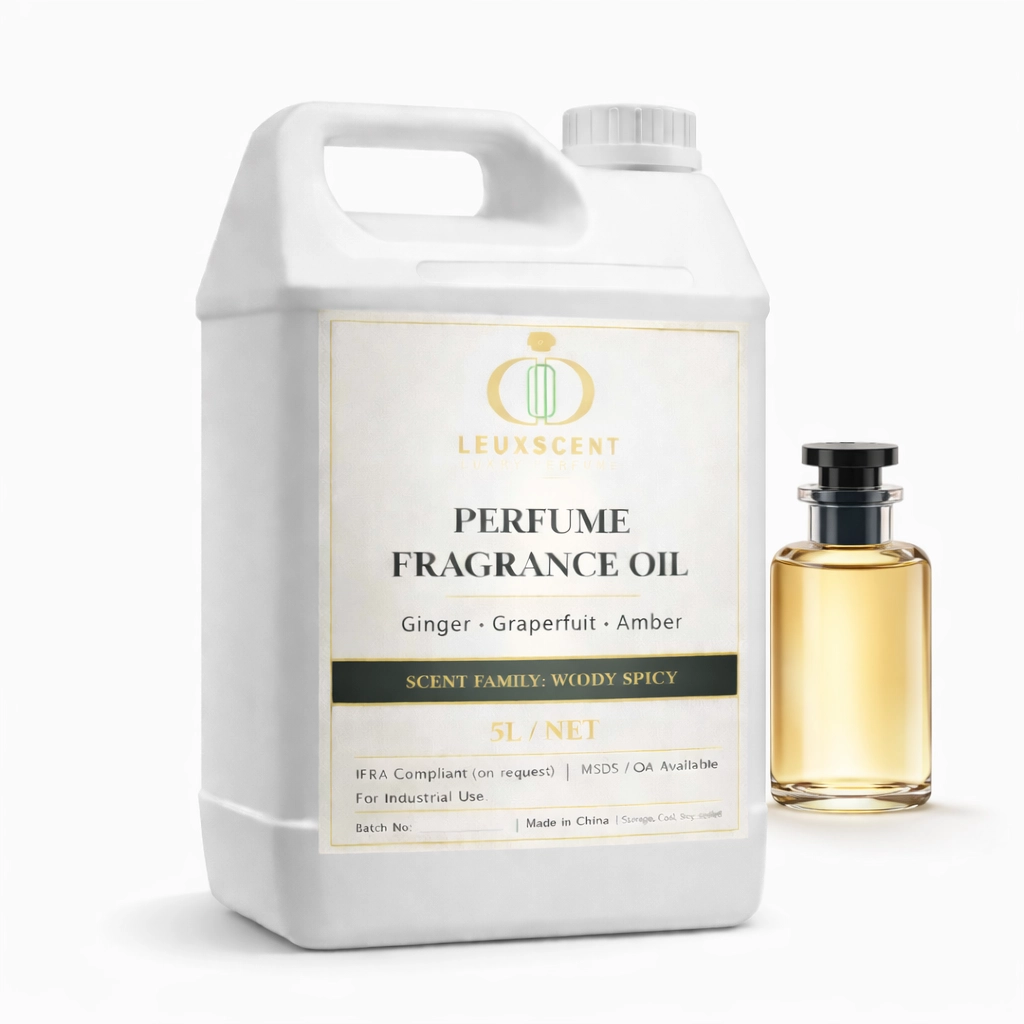
Perfume Fragrance Oil OEM Private Label Refill Program IFRA Compliant Manufacturer Supply Designer Perfume Oil
Perfume Fragrance Oil OEM Private Label Refill Program IFRA Compliant Manufacturer Supply Designer Perfume Oil
Perfume Fragrance Oil OEM Private Label Retail Ready Documentation Provided Manufacturer Supply Designer Perfume Oil
Perfume Fragrance Oil OEM Private Label Retail Ready Documentation Provided Manufacturer Supply Designer Perfume Oil
Wholesale Perfume Oil OEM Private Label Distributor Ready House Blend Retail Ready Designer Perfume Oil
Wholesale Perfume Oil OEM Private Label Distributor Ready House Blend Retail Ready Designer Perfume Oil
Wholesale Perfume Oil OEM Private Label Custom Filling Manufacturer Supply IFRA Compliant Designer Perfume Oil
Wholesale Perfume Oil OEM Private Label Custom Filling Manufacturer Supply IFRA Compliant Designer Perfume OilEmpowering Global Brands with Scent – LEUXSCENT, Your Expert Fragrance OEM Partner.
 Scan QR Code

Facebook
Instagram
LinkedIn
YouTube
Pinterest