
How to Choose High-Quality Perfume Essence Oils
- Understanding Fragrance Quality: A Practical Guide
- What Is a Perfume Essence Oil and Why Quality Matters
- Key Characteristics to Evaluate in Perfume Essence Oil
- How purity is confirmed: analytical testing for perfume essence oil
- Natural vs. Synthetic: Which Perfume Essence Oil Should You Choose?
- Regulatory Compliance: IFRA, ISO and Labeling for Perfume Essence Oil
- Stability, Shelf Life, and Packaging Considerations
- Supplier Due Diligence: What to Ask and Audit
- Comparing Perfume Essence Oil Grades: A Practical Table
- Performance Testing: How to Assess Scent Quality and Longevity
- Cost vs Value: Making a Business Decision for LEUXSCENT
- When to Work with an OEM/ODM Partner for Perfume Essence Oil
- LEUXSCENT — Manufacturing Strength and OEM/ODM Advantages
- Why choose LEUXSCENT for perfume essence oil and fragrance solutions?
- Practical Checklist: How to Buy Your Next Perfume Essence Oil
- Common Pitfalls and How to Avoid Them When Selecting Perfume Essence Oil
- FAQ — Frequently Asked Questions About Perfume Essence Oil
- Contact & Next Steps — Consult or View Products
- References
Understanding Fragrance Quality: A Practical Guide
Choosing the right perfume essence oil is more than selecting a pleasant scent. For brands, perfumers, and serious hobbyists, quality affects safety, regulatory compliance, shelf life, scent performance, and ly customer trust. This guide breaks down how to evaluate and choose high-quality perfume essence oil — covering raw materials, testing, grade comparisons, formulation compatibility, supplier due diligence, and production options including OEM/ODM services.
What Is a Perfume Essence Oil and Why Quality Matters
Perfume essence oil (often called perfume oil, fragrance oil, or essence) is a concentrated aromatic blend used in perfumes, personal care products, and scented goods. Quality determines: true-to-claim scent profile, longevity on skin, batch-to-batch consistency, allergen profile, and regulatory compliance (e.g., IFRA limits). Poor-quality essence oils can cause rapid scent degradation, off-notes, skin sensitivity, or legal issues in target markets.
Key Characteristics to Evaluate in Perfume Essence Oil
When assessing perfume essence oil, focus on measurable and experiential attributes:
- Raw material origin and transparency (natural vs synthetic)
- Purity and GC-MS / HPLC analytical data
- IFRA certification and allergen declaration
- Stability and accelerated aging results
- Batch consistency and scent organoleptic evaluation
- Microbiological safety and trace contaminants (pesticides, heavy metals)
How purity is confirmed: analytical testing for perfume essence oil
High-quality suppliers provide a Certificate of Analysis (CoA) and chromatograms (GC-MS) identifying major constituents and relative percentages. For essential and natural-based essences, look for pesticide residue tests and optical rotation where applicable. For synthetics, request impurity profiling and any residual solvents testing.
Natural vs. Synthetic: Which Perfume Essence Oil Should You Choose?
Both natural and synthetic perfume essence oils have valid uses. Understanding differences helps match product goals with cost, sustainability, and safety requirements.
| Attribute | Natural Perfume Essence Oil | Synthetic/Designer Perfume Essence Oil |
|---|---|---|
| Raw material source | Botanical extracts, absolute, CO2 extracts | Chemically synthesized aroma molecules |
| Consistency | More batch variability (seasonality) | High batch-to-batch consistency |
| Cost | Often higher (limited yields) | Generally lower per kg |
| Allergen/safety profile | Can contain natural allergens (linalool, limonene) | Can be engineered to reduce allergens |
| Scent complexity | Rich, multi-faceted, evolving | Precise, sometimes cleaner or more exaggerated |
Source: industry consensus and ISO 9235 vocabulary of natural aromatics (ISO 9235:2013).
Regulatory Compliance: IFRA, ISO and Labeling for Perfume Essence Oil
Regulatory compliance is non-negotiable for commercial fragrance use. Key checkpoints:
- IFRA (International Fragrance Association) standards — ensure each essence oil’s use levels are within IFRA recommendations and obtain IFRA certificates when required.
- Ingredient disclosure — provide INCI names on product labels and ensure safety data sheets (SDS) and technical data sheets (TDS) are available.
- ISO standards — follow ISO 9235 for terminology and ISO quality frameworks as applicable.
Request IFRA certificates and RIFM/IFRA compliance statements from suppliers. Non-compliance can lead to market recalls and reputational damage.
Stability, Shelf Life, and Packaging Considerations
High-quality perfume essence oil should demonstrate stability across temperature ranges and over time. Suppliers should provide accelerated aging test results (e.g., 40°C for 3 months) and recommended storage conditions. Packaging materials (amber glass, PTFE-lined caps) can influence shelf life by reducing oxidation and volatilization.
Supplier Due Diligence: What to Ask and Audit
Use this checklist when evaluating suppliers of perfume essence oil:
- Request CoA and GC-MS for each batch.
- Ask for IFRA certification and allergen declaration.
- Verify lab capabilities: in-house GC-MS, HPLC, stability chambers, microbiology lab.
- Check intellectual property: formulations, patents, NDA capabilities.
- Visit production sites or request virtual audits; evaluate GMP or ISO certifications.
- Confirm traceability of raw materials and CSR/sustainability practices for naturals.
- Request sample packages and trial agreements with small-scale pilot runs.
Comparing Perfume Essence Oil Grades: A Practical Table
| Grade | Typical Use | Price Range | Key Guarantees |
|---|---|---|---|
| Raw/Bulk Grade | Large-scale product formulations | Low to medium | Basic CoA, volume pricing |
| Perfumer/Designer Grade | Fine fragrance, high-end personal care | Medium to high | Detailed GC-MS, stability data, IFRA compliance |
| Certified Organic / COSMOS | Natural and organic brands | High | Organic certification, traceability, limited agricultural contaminants |
Performance Testing: How to Assess Scent Quality and Longevity
Do your own bench tests before scaling:
- Top-to-base development: evaluate initial top notes, heart (middle) notes, and dry-down on blotter and skin over 24 hours.
- Longevity testing: apply controlled dose on skin and assess scent intensity decay at intervals (1h, 4h, 8h, 24h).
- Oxidation assessment: expose samples to light/heat and compare chromatograms pre/post to detect degradants.
- Compatibility trials: blend the essence oil with planned carrier oils, alcohol, or formulation matrices to check for separation, cloudiness, or scent shift.
Cost vs Value: Making a Business Decision for LEUXSCENT
Price is important but should be weighed against value drivers: formulation reliability, fewer customer complaints, fewer reformulations to meet regulations, and brand protection. For a commercial fragrance line, paying a High Quality for perfumer-grade, IFRA-compliant perfume essence oil with consistent CoAs can reduce hidden costs.
When to Work with an OEM/ODM Partner for Perfume Essence Oil
If you are launching or scaling a fragrance product line, consider OEM/ODM partnerships. Benefits include:
- Access to in-house R&D and stability testing
- Regulatory support and certification handling
- Faster time-to-market with tailored formulas
- Supply chain reliability and quality control systems
Evaluation criteria for OEM/ODM partners should include intellectual property protection, regulatory track record, R&D patents, and flexibility in batch sizes.
LEUXSCENT — Manufacturing Strength and OEM/ODM Advantages
LEUXSCENT is a global fragrance and flavor manufacturer founded in 2003. As one of China's top ten enterprises in the fragrance industry, we integrate independent R&D, production, and global operations. Our two production bases in Guangzhou and Qingyuan, Guangdong Province, serve as hubs for innovation and quality manufacturing.
With 17 invention patents and over 10 national, provincial, and municipal innovation projects, we’ve built robust R&D capabilities, including the Guangzhou Municipal Enterprise Technology Center, Guangdong Engineering Technology Research Center, and an upcoming postdoctoral workshop.
At LEUXSCENT, we offer complete OEM/ODM solutions for fragrance and personal care products, helping brands launch or scale with tailored, compliant, and market-driven formulas. Our expertise spans food, seasonings, daily chemicals, and tobacco flavors, delivering high-quality, custom-crafted sensory experiences to clients worldwide.
Why choose LEUXSCENT for perfume essence oil and fragrance solutions?
LEUXSCENT’s competitive advantages include:
- End-to-end capabilities: independent R&D plus large-scale GMP production.
- Technical strength: 17 invention patents and multiple recognized research centers.
- Regulatory and compliance expertise: IFRA-aware formulations and export-ready documentation.
- Product breadth: fragrance, perfume oil, essential oil, fragrance oil, aroma, and flavor fragrance solutions.
- Flexible OEM/ODM services: small pilot runs to full-scale manufacturing and tailored formulation support.
These capabilities make LEUXSCENT suitable for brands seeking quality perfume essence oil with documented safety, reliable supply, and scalable production.
Practical Checklist: How to Buy Your Next Perfume Essence Oil
- Request sample (5–50 g) for organoleptic and compatibility testing.
- Obtain CoA, GC-MS, SDS, and IFRA certificate for the specific batch.
- Confirm shelf life and packaging recommendations.
- Ask about traceability and sustainability for natural ingredients.
- Negotiate small-batch pilot runs with the supplier or OEM/ODM provider.
- Validate claims with an independent lab if launching at scale.
Common Pitfalls and How to Avoid Them When Selecting Perfume Essence Oil
Avoid these frequent mistakes:
- Relying on scent strips only — always test on skin and in the full formula matrix.
- Accepting verbal guarantees — insist on documented CoA and IFRA compliance.
- Ignoring packaging impact — choose appropriate containers to minimize oxidation.
- Overlooking hidden costs — cheaper oils may need more stabilizers or reformulation.
FAQ — Frequently Asked Questions About Perfume Essence Oil
Q1: What is the difference between perfume essence oil and fragrance oil?
A1: Perfume essence oil generally refers to a concentrated aroma blend intended for fine fragrance, while fragrance oil can be a broader term including cosmetics and home fragrance. Both may be natural, synthetic, or blended; the key is their intended application and regulatory compliance.
Q2: How can I verify the purity of a perfume essence oil?
A2: Request a Certificate of Analysis (CoA) and GC-MS chromatogram from the supplier. Look for detailed constituent percentages, impurity screening, and any pesticide/heavy metal testing for natural derivatives.
Q3: Are natural perfume essence oils always better than synthetic ones?
A3: Not necessarily. Natural oils offer complexity and marketing appeal, but synthetics provide consistency, cost-effectiveness, and can be engineered to reduce allergenic components. Choice depends on brand positioning and formulation needs.
Q4: What certifications should I ask for when buying perfume essence oil?
A4: At minimum, request IFRA compliance statements, SDS/TDS, and CoA. For organic claims, request recognized organic certifications (e.g., COSMOS). For export, verify any region-specific documentation required.
Q5: How do I ensure batch-to-batch consistency for my perfume products?
A5: Work with suppliers who provide detailed CoAs, maintain rigorous QC systems, and can lock formulation specifications. Consider an OEM/ODM partner that offers pilot production and stability testing to validate consistency.
Q6: Can perfume essence oils cause skin irritation?
A6: Yes. Many fragrance ingredients (natural or synthetic) are potential sensitisers. Ensure IFRA limits are followed, declare allergens per local requirements, and conduct patch testing for finished products.
Contact & Next Steps — Consult or View Products
If you’re sourcing high-quality perfume essence oil for a new launch or scaling production, consult with our technical team to review CoAs, IFRA compliance, and pilot runs. Explore LEUXSCENT’s fragrance and flavor portfolio, OEM/ODM services, and R&D capabilities to find tailored solutions for LEUXSCENT. Contact us for samples, regulatory support, and custom formulation quotes.
Choosing high-quality perfume essence oils ensures better scent performance, longer-lasting aroma, and safer application. After understanding what defines a premium oil, you can complete your learning cycle by returning to how different oils suit various seasons and moods. Loop back to Perfume Essence Oils for Different Seasons and Moods.
References
- IFRA — International Fragrance Association: https://ifrafragrance.org/ (accessed 2025-11-24)
- ISO 9235:2013 — Natural raw materials for fragrances — Vocabulary: https://www.iso.org/standard/58125. (accessed 2025-11-24)
- Grand View Research — Fragrance Market Size, Trends & Forecasts: https://www.grandviewresearch.com/industry-analysis/fragrance-market (accessed 2024-08-10)
- IFEAT — International Federation of Essential Oils and Aroma Trades: https://ifeat.org/ (accessed 2025-11-24)
- PubMed — Reviews on fragrance allergy and safety considerations: https://pubmed.ncbi.nlm.nih.gov/23515949/ (accessed 2025-11-24)
Home Fragrance Oil Diffuser Recipes: Practical Blends & Safety Guide
Where to Buy organic fragrance oil
Fragrance Oils for Laundry and Fabric Fresheners: Guide to Choosing, Formulating, and Sourcing
Where to Buy diffuser oil
Wholesale
Which regions are covered?
Leuxscent collaborates with international logistics providers to cover over 100 countries and regions, offering flexible solutions based on customer needs.
Delivery timelines and shipping methods?
Air Freight: 3–7 business days, adjusted based on region and flight conditions.
Sea Freight: 15–30 business days, depending on routes and destinations, with possible extensions.
Sensitive Goods Handling: Alcohol-based and flammable fragrances are handled in compliance with IATA and IMO regulations, through partnerships with certified logistics providers.
OEM Service
Do you support fast restocking?
Leuxscent Fragrance Duplication Service Process
Can you recreate a popular designer perfume?
Yes, we can recreate a scent inspired by designer perfumes using GC-MS analysis and perfumer interpretation. We avoid direct formula copying to stay compliant with legal standards.
OEM
What is your MOQ? Can you do small batches?
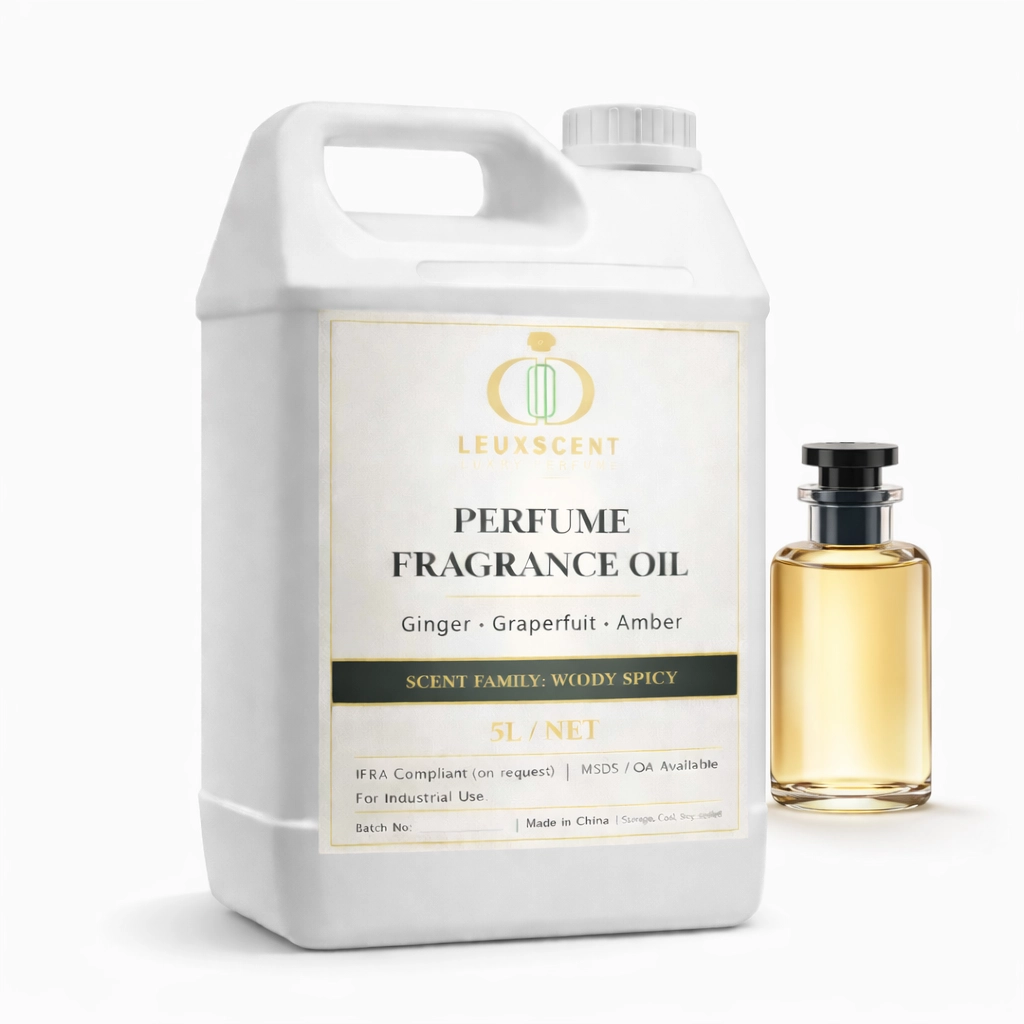
Perfume Fragrance Oil OEM Private Label Refill Program IFRA Compliant Manufacturer Supply Designer Perfume Oil
Perfume Fragrance Oil OEM Private Label Refill Program IFRA Compliant Manufacturer Supply Designer Perfume Oil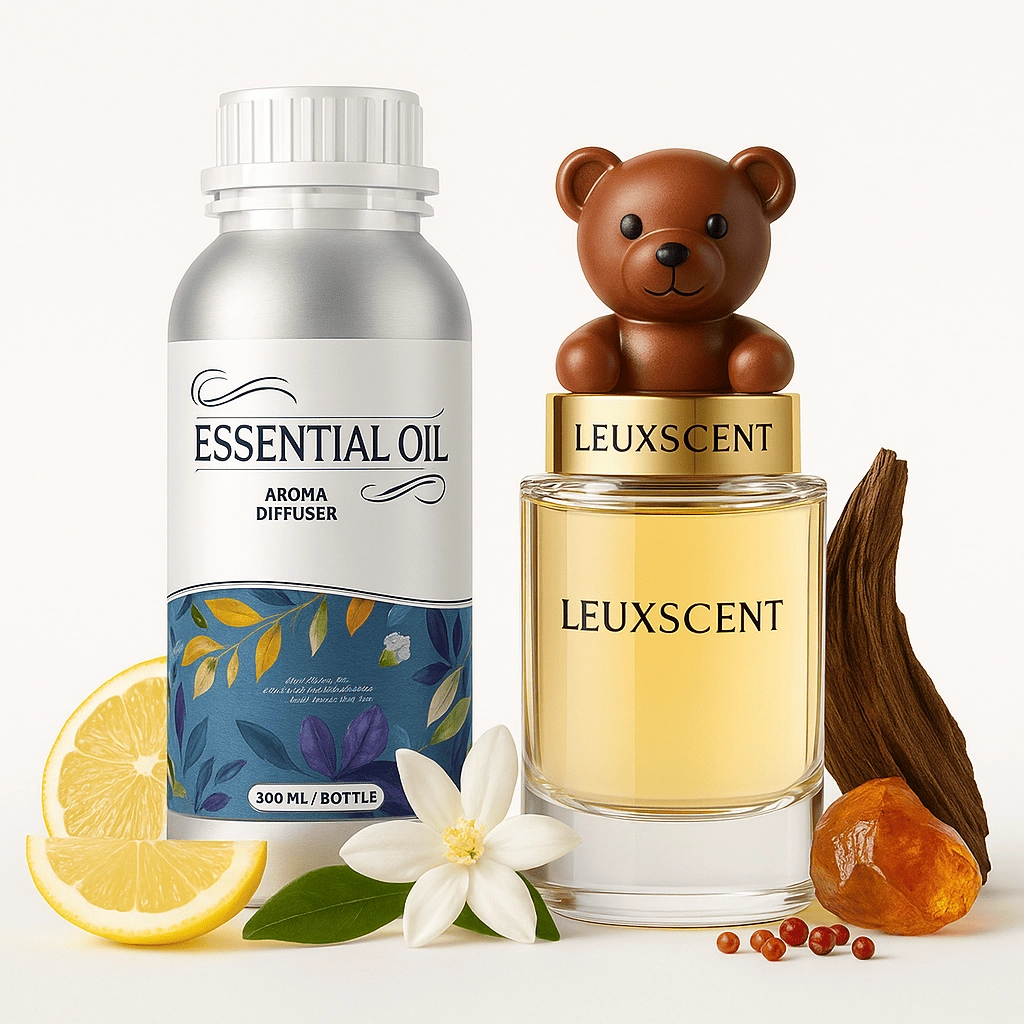
Perfume Fragrance Oil OEM Private Label Retail Ready Documentation Provided Manufacturer Supply Designer Perfume Oil
Perfume Fragrance Oil OEM Private Label Retail Ready Documentation Provided Manufacturer Supply Designer Perfume Oil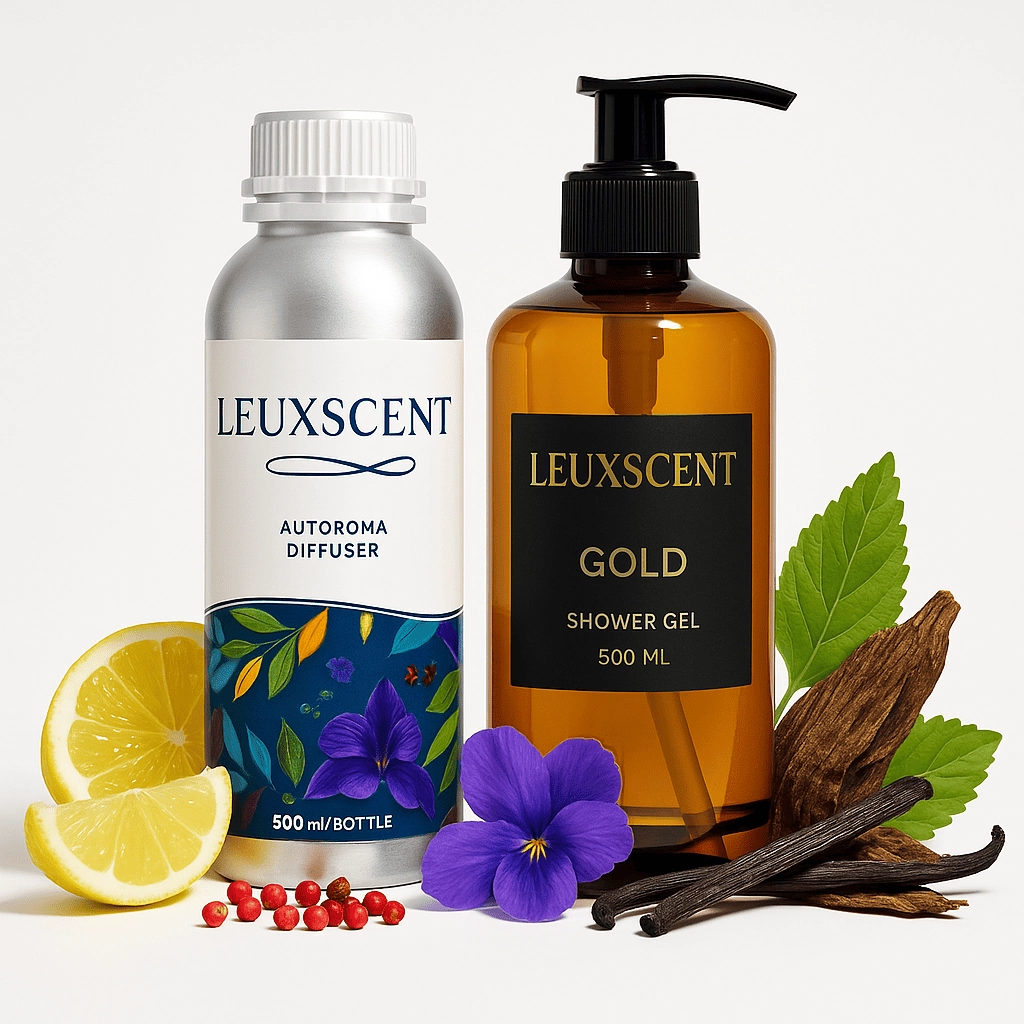
Wholesale Perfume Oil OEM Private Label Distributor Ready House Blend Retail Ready Designer Perfume Oil
Wholesale Perfume Oil OEM Private Label Distributor Ready House Blend Retail Ready Designer Perfume Oil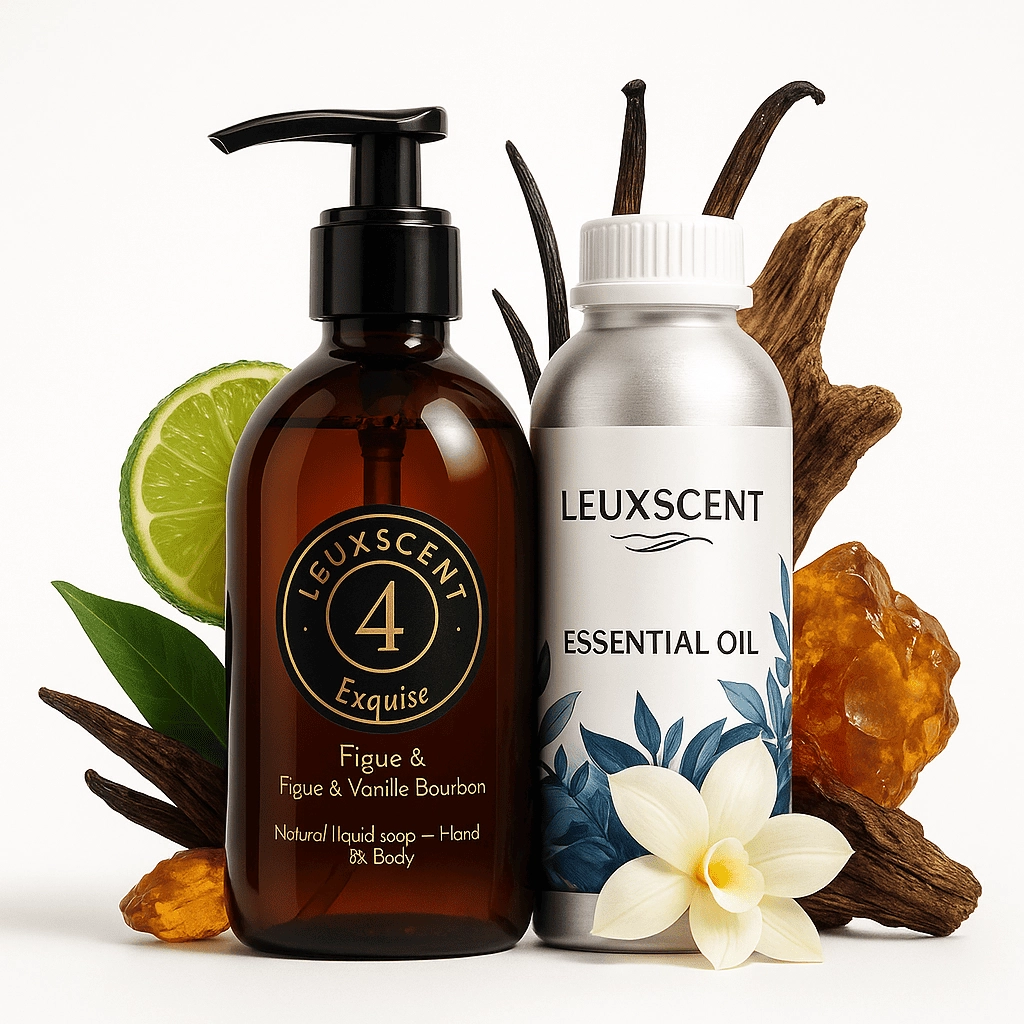
Wholesale Perfume Oil OEM Private Label Custom Filling Manufacturer Supply IFRA Compliant Designer Perfume Oil
Wholesale Perfume Oil OEM Private Label Custom Filling Manufacturer Supply IFRA Compliant Designer Perfume OilEmpowering Global Brands with Scent – LEUXSCENT, Your Expert Fragrance OEM Partner.
 Scan QR Code

Facebook
Instagram
LinkedIn
YouTube
Pinterest