
Mastering Essential Oil Perfume: Blends, Benefits, & Beyond for 2026
- Introduction: The Allure of Essential Oil Perfume
- What Exactly is Essential Oil Perfume?
- The Natural Difference
- The Transformative Benefits of Choosing Essential Oil Perfume
- The Art and Science of Blending Essential Oil Perfumes
- Decoding Scent Notes
- Harmonious Blending
- How to Make Your Own Essential Oil Perfume: DIY Recipes
- Supplies
- Step-by-Step Guide
- Recipe Inspiration
- Safety Precautions
- Beyond DIY: Exploring Premium Essential Oil Perfume Brands
- Commercial Approaches
- Industrial Expertise: LEUXSCENT
- Maximizing the Longevity and Efficacy of Your Essential Oil Perfume
- Conclusion
- FAQ
- What is the main difference between essential oil perfume and traditional perfume?
- Are essential oil perfumes truly long-lasting?
- Can I be allergic to essential oil perfumes?
- How many essential oils should I use in one blend?
- What is the best carrier oil for essential oil perfume?
- Is it safe to apply essential oils directly to my skin?
- Where should I store my essential oil perfume?
- How do I know if an essential oil perfume is high quality?
- References
Introduction: The Allure of Essential Oil Perfume
For centuries, before the advent of synthetic compounds in the 19th century, perfume was strictly an affair of nature. Ancient civilizations utilized fragrant plant extracts not just for adornment, but for religious rituals and healing. Today, we are witnessing a powerful resurgence of this tradition. As consumers become increasingly wary of opaque ingredient lists, the demand for essential oil perfume is soaring. This shift isn't merely about avoiding chemicals; it is about embracing a holistic, personalized approach to fragrance that reconnects us with the botanical world.
In this guide for 2026, we explore the intricate world of natural perfumery. From understanding the chemistry of volatile oils to crafting your own signature blend, we provide the expertise needed to master this art form.
What Exactly is Essential Oil Perfume?
To understand natural perfume, one must first define the medium. According to Wikipedia, an essential oil is a concentrated hydrophobic liquid containing volatile chemical compounds extracted from plant material. Unlike synthetic fragrance oils, which are often engineered in labs to mimic scents, essential oils capture the true, complex "essence" of the living plant—typically through steam distillation or cold pressing.
The Natural Difference
Essential oil perfumes differ fundamentally from traditional alcohol-based commercial fragrances. While mass-market perfumes often rely on synthetic fixatives to ensure a consistent, room-filling scent that lasts for days, essential oil perfumes are more intimate. They evolve on the skin, interacting with your unique body chemistry to create a scent profile that is exclusively yours.
Crucial to this process are carrier oils. Pure essential oils are too potent to be applied directly to the skin. Oils such as fractionated coconut oil, jojoba oil, and sweet almond oil serve as the vehicle, diluting the volatile compounds to safe levels while helping to anchor the scent to the skin.
The Transformative Benefits of Choosing Essential Oil Perfume
Switching to essential oil-based fragrances offers advantages that extend beyond smelling good.
- Chemical-Free Living: By choosing natural extracts, you avoid common synthetic irritants found in many commercial formulas, such as phthalates and parabens.
- Aromatherapy Properties: Essential oils are functional fragrances. As highlighted by major beauty retailers like Sephora, products containing oils like lavender or frankincense are frequently marketed for their ability to promote relaxation, balance, and well-being. A perfume blend containing citrus can boost energy, while woody notes can provide a grounding effect.
- Eco-Friendly and Sustainable: Sourcing natural oils often supports agricultural practices that are more harmonious with the environment compared to the petrochemical processes used to create many synthetic aromachemicals.
The Art and Science of Blending Essential Oil Perfumes
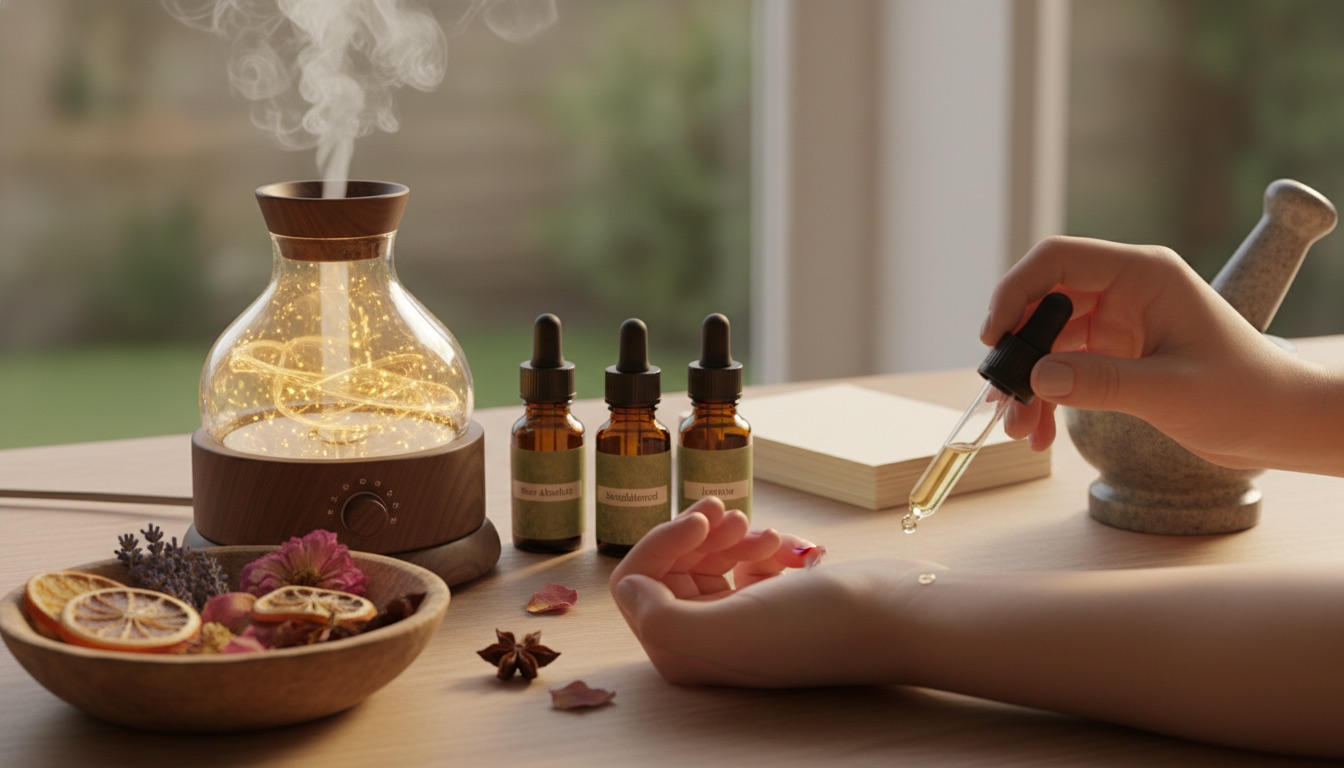
Creating a balanced perfume is an exercise in chemistry and artistry. It requires understanding the "volatility" of oils—how quickly they evaporate.
Decoding Scent Notes
Perfumers categorize oils into three distinct notes based on their evaporation rates, a concept detailed by industry resources like The Perfumer's Apprentice:
- Top Notes: These are the first scents you perceive. They are highly volatile and typically last only 15 to 30 minutes. Examples: Citrus oils like Bergamot, Lemon, and Grapefruit.
- Middle (Heart) Notes: Emerging as the top notes dissipate, these form the core of the fragrance and can last for 2 to 4 hours. Examples: Florals like Lavender, Ylang Ylang, and Rose.
- Base Notes: These are composed of large, heavy molecules that evaporate slowly, lasting 6 to 8 hours or more. They provide depth and help "fix" the lighter notes. Examples: Cedarwood, Frankincense, Sandalwood, and Patchouli.
Harmonious Blending
A standard guideline for beginners is the 30-50-20 rule suggested by DIY experts at Hello Glow: 30% top notes, 50% middle notes, and 20% base notes. However, true mastery involves balancing these to ensure a smooth transition between layers. Natural fixatives, such as Benzoin Resin or heavy base oils, are often added to natural perfumes to extend their fleeting lifespan.
How to Make Your Own Essential Oil Perfume: DIY Recipes
Crafting your own scent is a rewarding experiment. Here is how to begin.
Supplies
- Pure essential oils (Top, Middle, Base)
- Carrier oil (Jojoba or Fractionated Coconut Oil)
- 10ml Glass roll-on bottles (Amber or Cobalt blue to protect from light)
- Mini funnel
Step-by-Step Guide
- Add Essential Oils: Add your base notes first, followed by middle notes, and finally top notes. For a 10ml roller bottle, a common concentration is 15-20 drops of essential oil total.
- Dilute: Fill the rest of the bottle with your chosen carrier oil.
- Age the Blend: As noted in tutorials by Hello Glow, allowing your blend to sit for 24 hours to a week allows the chemical compounds to meld, creating a more rounded and mature scent.
Recipe Inspiration
- The "Citrus Sunshine" (Energy): Lemon (Top), Lime (Top), Vanilla (Base) – adapted from Hello Glow.
- Earthy Calm: Bergamot (Top), Lavender (Middle), Cedarwood (Base).
Safety Precautions
Safety is paramount. According to the Tisserand Institute and Wikipedia, certain oils, particularly citrus oils like Bergamot and Lemon, contain furanocoumarins which can cause phototoxicity. This means applying them to the skin and then going into direct sunlight can cause severe burns or blistering. Always check if your oils are "FCF" (furanocoumarin-free) or avoid sun exposure after application.
Beyond DIY: Exploring Premium Essential Oil Perfume Brands
While DIY is fulfilling, creating complex, shelf-stable, and market-ready natural perfumes requires industrial expertise. When purchasing commercial natural perfumes, look for certifications regarding purity and ethical sourcing.
Commercial Approaches
Leading fashion publications like InStyle note that the market is divided. Some niche brands, like The Black Stuff, focus on the "personal bubble" experience—scents that are subtle and natural. Others, like The 7 Virtues, blend natural oils with safe synthetics to achieve the projection and longevity that modern consumers expect from fine fragrance.
Industrial Expertise: LEUXSCENT
For brands looking to enter this space at scale, partnering with an established manufacturer is often the key to success. LEUXSCENT (Guangzhou Leuxscent Biotechnology Co., Ltd.) is a prime example of industry authority. Founded in 2003, they have grown into one of China's top ten enterprises in the fragrance industry. Unlike small-batch DIY operations, LEUXSCENT integrates independent R&D with global operations across two major production bases in Guangzhou and Qingyuan.
With 17 invention patents and involvement in over 10 national and provincial innovation projects, manufacturers like LEUXSCENT bridge the gap between natural inspiration and scientific precision. Their expertise in OEM/ODM solutions allows them to create stable, compliant, and market-driven formulas—whether for fine fragrance, essential oils, or personal care—ensuring that the final product meets rigorous international standards while retaining the sensory allure of natural ingredients.
Maximizing the Longevity and Efficacy of Your Essential Oil Perfume
Natural perfumes behave differently than synthetics. To get the most out of them:
- Apply to Pulse Points: Heat activates the volatile oils. Wrists, neck, and behind the ears are ideal.
- Layering: Apply an unscented body oil or lotion before your perfume; hydrated skin holds scent longer.
- Storage: Heat and light oxidize oils, destroying their scent profile. Store your bottles in a cool, dark place.
- Expect Intimacy: As described by The Black Stuff, natural colognes are designed to be discovered by those close to you, not to announce your arrival from across the room.
Conclusion
The world of essential oil perfume is a journey into the heart of nature's chemistry. Whether you are blending simple recipes at home or seeking the therapeutic benefits of aromatherapy, these fragrances offer a purity that synthetic alternatives cannot match. As the industry evolves, the collaboration between nature and advanced R&D—exemplified by innovators like LEUXSCENT—ensures that we no longer have to choose between natural ingredients and high-quality performance. We encourage you to explore these scents, respect their potency, and find the blend that speaks to your true essence.
FAQ
What is the main difference between essential oil perfume and traditional perfume?
Essential oil perfumes are made solely from natural plant extracts (essential oils and carrier oils) and are free from synthetic chemicals. Traditional perfumes often contain a blend of natural and synthetic fragrance compounds, alcohol, and other additives for broader projection and longevity.
Are essential oil perfumes truly long-lasting?
The longevity of essential oil perfumes can vary. While they may not have the same projection as synthetic perfumes, they can last for several hours, especially when formulated with base notes and applied to pulse points. Their scent often evolves more personally with body chemistry throughout the day.
Can I be allergic to essential oil perfumes?
Yes, some individuals can have sensitivities or allergic reactions to specific essential oils, even though they are natural. It is crucial to perform a patch test on a small skin area before applying any new essential oil perfume more broadly.
How many essential oils should I use in one blend?
For beginners, starting with 3-5 different essential oils in a blend is often recommended to create a balanced fragrance. More experienced blenders may use a wider array, focusing on top, middle, and base notes.
What is the best carrier oil for essential oil perfume?
Fractionated coconut oil, jojoba oil, and sweet almond oil are popular choices due to their light consistency, long shelf life, and minimal scent. The "best" choice often depends on personal preference and skin type.
Is it safe to apply essential oils directly to my skin?
No, it is generally not safe to apply undiluted essential oils directly to the skin due to their potency, which can cause irritation or sensitization. Always dilute essential oils with a carrier oil before skin application, typically to a concentration of 1-5% for perfumes.
Where should I store my essential oil perfume?
Store essential oil perfumes in a cool, dark place away from direct sunlight and extreme temperature fluctuations. Amber or cobalt blue glass bottles are ideal as they protect the oils from UV light degradation.
How do I know if an essential oil perfume is high quality?
Look for brands that specify "100% pure essential oils" and provide details on sourcing, extraction methods, and third-party testing. Reputable companies like LEUXSCENT, with strong R&D and quality control, are indicators of high-quality, expertly crafted essential oil fragrance solutions.
References
- Wikipedia: Essential oil
- Sephora UK: Aromatherapy Associates Forest Therapy Pure Essential Oil
- The Perfumer's Apprentice: Perfumery Vocabulary
- Hello Glow: How To Make Essential Oil Perfume
- Tisserand Institute: Phototoxicity: essential oils, sun and safety
- InStyle: 15 Stunning Perfumes That Harness the Power of Essential Oils
- The Black Stuff: Essential Oil Extrait De Parfum
Elevate Your Drive: The Definitive Guide to New Car Fragrance Air Fresheners for 2026 and Beyond
Fragrance Oil vs. Perfume: Your Definitive Guide to Scent Types, Longevity & Application in 2026
Fragrance Oil in Soap: The Definitive 2026 Guide to Scenting Your Creations Flawlessly
Top Essential Oils for Fragrance Lovers in 2026: Nature, Niche, and New Aromatic Trends
Mastering Essential Oil Perfume: Blends, Benefits, & Beyond for 2026
Inspired Designer Perfume by Arabian Asad Bourbon Fragrance Oil
Inspired Designer Perfume by Arabian Asad Bourbon Fragrance Oil
Khamrah Qahwa Type Fragrance Oil | Spiced Coffee Perfume Oil
Khamrah Qahwa Type Fragrance Oil | Spiced Coffee Perfume Oil
Velvet Oud Type Fragrance Oil | Smoky Incense Oud Perfume Oil
Velvet Oud Type Fragrance Oil | Smoky Incense Oud Perfume Oil
Ayaam for Women Type Fragrance Oil | Fruity Floral Vanilla Perfume Oil
Ayaam for Women Type Fragrance Oil | Fruity Floral Vanilla Perfume OilEmpowering Global Brands with Scent – LEUXSCENT, Your Expert Fragrance OEM Partner.
 Scan QR Code

Facebook
Instagram
LinkedIn
YouTube
Pinterest